Thursday, September 25, 2014

Board of Trade Daily Reporter 1861


click to enlarge

Early traders at the CBOT had an enormous amount of external factors to deal with and some of the difficulties were reflected in the above Board of Trade Daily Reporter from May 23rd, 1861 in my collection.  To begin it states, "Business is brought to a dead halt on account of the want of funds wherewith to operate."  Not exactly an indication of market confidence!  Liquidity events are a common occurrence in commodity markets but this end of day quote sheet indicates the severity of how the burgeoning American Civil War affected trading.  Just over a month prior was the Battle of Fort Sumter and as one would expect, it created tremendous upheaval in money markets. 

Many Illinois banks had their capital base backed with securities issued by what would eventually become Confederate states.  The value of such Confederate securities were in decline since the election of Abraham Lincoln but due to the first skirmish of the war, liquidity became severely impacted as different premiums differentiated into the method by which payment would be made.  The issues weren't limited to Illinois banks (of which over 80% eventually failed) as the quote sheet indicates that a couple larger banks "threw out eleven of the Union list, and holders refuse to sell for anything but gold or eastern exchange."  Drawing a check upon certain solvent banks could also demand a 10-12% premium which indicates the level of panic.  The CBOT decided to take drastic measures in maintaining benchmark pricing and passed the following resolution on this day:

"WHEREAS, The recent events in the monied affairs of Chicago have culminated in a return to a standard of Gold and Silver.  Therefore
Resolved, That in the opinion of the Board of Trade of Chicago, all sales of property, and daily quotations thereof should hereafter be made in funds equal to specie."

While this was a disaster for the nation and almost everyone, it's a goldbugs dream.  Let me veer off for a little editorial comment that modern day goldbugs envision a similar wish because they're some of the most miserable people imaginable.  The best summation of what I've generally observed w/goldbugs is that they've failed in how the world is so they wish for the destruction of it so they can finally come out on top as that's the only way for them to succeed. 

Back on topic, if you look at the transaction list on the quote sheet you can see it not only indicates price but also method of payment which includes preferred check, union currency, stump-tail check, sight exchange, and gold.  It's apparent that gold receives the largest premium followed by preferred check and then union currency.  For anyone with a further interest in grain trading during the Civil War and early CBOT history, I highly suggest William Ferris' excellent book The Grain Traders.

Just over a year after that day, the CBOT raised $15,000 and 180 volunteers to create the CBOT Battery which served as a horse artillery battery for the Union.  Following the war, the CBOT also established centralized clearing to ensure market efficiency and eliminate the problems which this quotation sheet described.  

Gnomes of South Wacker Drive

Starting with the launch of the IMM currency futures at CME in 1972, the Gnomes of Zurich had to match wits with the Gnomes of (first on West Jackson and then later on) South Wacker Drive when it came to trading Swiss Franc futures. A few pictures below show an active currency quadrant in the early 1990s, click to enlarge the photos. 

Above is the currency quadrant during the opening of the upper trading floor in 1993.  By the time I got to the Merc in 1999, the crowd was much thinner than in this photo as volumes were beginning to shift to electronic trading by that point. 


This is of the Swiss Franc pit during heavy trading and the gentleman in the center of the photo in the light blue jacket showing a 7 offer isn't trading but is a pit reporter who was relaying quotes to another pit reporter at the top of the pit who would then enter them into the electronic system. 


Also of the same Swiss pit, the photo shows how chaotic is could get in there.  To me it appears that the broker in top center is trying to get the attention and sell to the local who is 9 bid at the bottom even though another broker is 0 even bid behind him on the far right, LOL.

Opium futures

Taking a slight deviation from strictly 'trading pit' history, the origins of any futures trading I find interesting and recently obtained these telegraph orders regarding Indian opium futures from 1869 and 1870.  Now it might be a slight stretch to refer to these as 'futures contracts' because ultimately there was no clearinghouse but there was standardization in terms of delivery month, quality grade, delivery location and quantity.  Opium was traded in chests which weighed to a standard, historically estimated at 140 lbs and that came about to be what two men could carry at a time.  According to records of the British East India Company, there were distinctive grades of opium which had varying prices due to quality differences such as Turkish, Malwa, and Patna.

photosource: mit.edu

The two telegraphs below are on behalf of the Buchraj/Buchraz family who were prominent opium traders in the city of Indore, modern day Rajasthan but was then known as Malwa

click photo to enlarge

"Purchased (29000) July (25) annas (3 1/2) now (25 7/8)+"

I'm not going to dip into the history of the Indian exchange rates but 29000 sounds like an awful lot to have been purchased.  FYI, annas were an Indian currency unit and this trade was done in that denomination.  Appears to simply be a trade confirmation from Indore to Mandsaur, the city which served as the center of the Malwa opium trade.  


click photo to enlarge

"Fourth (1373) hearing new crop short buy 4 bales opium at (58) four annas less +"

The principles of supply and demand are no different for any crop and this telegram is using information from the growing area to purchase opium at the primary trading center of Calcutta.

For an excellent and illustrated background on the opium industry during the late 19th century in India, I highly suggest looking through this link from MIT (yes that MIT) Visualizing Cultures.

In addition while on the topic of opium, I can't recommend highly enough Nick Tosches' article "Confessions of an Opium-Seeker" which was first published in Vanity Fair and then expanded as a book The Last Opium Den.  Tosches is an amazing author and this piece remains one of my all time favorite pieces of writing. 

Best of

Tuesday, September 16, 2014

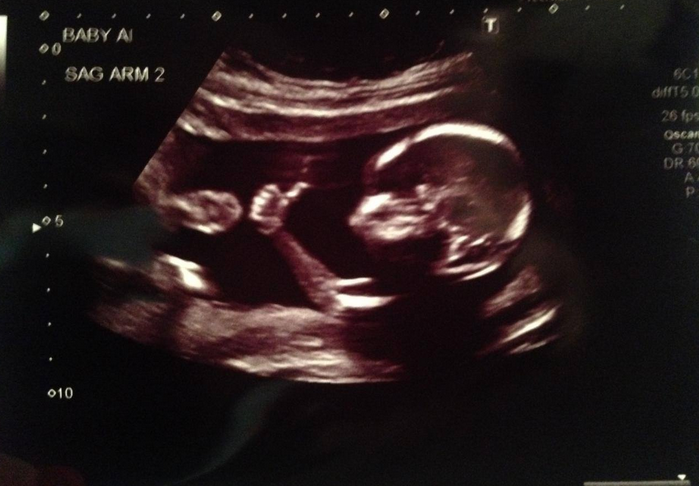
Back to the blog...if I don't have a diaper to change


photo credit: USAtoday (not my kid in pic)

Once again I'd like to give thanks to all the dads and others who wrote to wish my wife, baby and I well as it was very kind of you all!  I'm happy to report that my wife gave birth to our perfectly healthy daughter a few weeks back in the most perfect place in the world today, Palo Alto, and slowly everyone is getting into a routine.  Having a kid is THE GREATEST so I can understand all the enthusiasm from the dads who wrote in and I will be sure to extend the same wishes to other expecting parents.

I'm looking forward to sharing with my daughter children's stories from my own youth and reading her kids books. As a "push gift" to myself, I bought a copy of Sled Driver and it's followup book The Untouchables, amazing books that are highly recommended and well worth the cost!

Although the Family Medical Leave Act of 1993 still covers another 8 weeks of unpaid leave to unpaid bloggers at an unpaid blog, I'm about ready to get back a little earlier than I thought to rambling in this space.  Even though he's not my guy, I still don't want to disappoint the President when he visits this blog for new content, LOL


Thursday, August 7, 2014

Admin note

I wanted to give a heads up that this space will be quiet for a while as I'm expecting my first child within weeks and have already cut down on screen time for trading as a result of my wife and I getting as prepared as possible for the baby's arrival. 

In my thinking about having a kid on the way, it's definitely put into perspective time and how quickly it flies by.  As it relates to this corner of the internet, the blog has been up for 6 years now and I last traded in the pit 9 years ago after spending parts of the previous 8 years on various trading floors!  It's a little funny in retrospect how it wasn't even a conscious decision at the time to trade entirely electronic as a full day standing in the pit eventually turned into going there for opens and closes only, then opens only and soon thereafter not even bothering to walk to the floor as better opportunity was on the trading screen.  Even though I was part of it for 8 years, having now been trading entirely electronic for 9 years and only occasionally visiting the floor in Chicago anymore, it still amazes me that something as crazy as the trading pits ever existed in retrospect.

A lifetime of vivid memories can originate from a short amount of time if you were fortunate to be a part of something as interesting as working in and around the trading pits.  To have spent my formative years of 18-25 made the experience more special and eventually I hope to share everything I remember along w/all the memorabilia I've collected.  This might be an improper analogy but I wanted to take a break leaving this thought.....

A lot of my spare time the last few months has been spent reading everything I can about F-105 Thuds during Operation Rolling Thunder.  Pilots who wrote memoirs generally had an even more compressed time of 6-8 months to draw memories from, but air combat clearly leaves a more distinct impression than trading.  That said, one line from a book on Thuds, which I wanted to share, is true for any profession and I felt trading in particular:

"There are pilots who fly fighters and there are fighter pilots.  You guys want to be fighter pilots, not pilots flying fighters.  Look for the difference." - Ed Rasimus When Thunder Rolled

Tuesday, July 29, 2014

Equity index futures contract launch buttons

click photo to enlarge

I'm not sure when the tradition started, but it was widespread amongst futures exchanges by the 1980's to commemorate the launch of a new contract through buttons which could be pinned on a trading jacket.  These buttons would be handed out in the morning of the launch day at the entrance to the trading floor and generally be worn maybe for a day before being discarded pretty quickly thereafter.  Exchanges used these buttons to market, or at the very least to simply remind the finite amount of members on the trading floor of a new contract launch in hopes that they might step into that pit to trade it.  Illiquidity could doom a contract from the start so anything that would encourage bodies to trade something new would help a nascent contract gain momentum. 

In the past I've showcased various buttons from my collection w/individual photos but recently got a chance to categorize them into various groups like the equity index buttons shown above.  I'll try to put up other categories eventually, such as grains or fixed income, and provide the background on them as time allows.

1 - Probably the best of my collection is the S&P 500 button from 1982 whose graphic was based upon the STP fuels logo.  When the Spoos began trading, I don't think anyone could've expected the contract to be as hugely successful for the exchange as it has.  I actually have an extra one of these buttons, so if someone has an amazing memorabilia trade to offer I'd consider it but the bar is very high.  

2 - This button celebrated a decade of success for the S&P 500 contract in 1992 and incorporated that original button style into it.

3 - From 2007, this button also celebrates a milestone for the Spoos at 25 years.

4 - Just before celebrating a decade with the S&P 500, the CME launched the S&P 400 Midcap contract.

5 & 6 -This is a pair of buttons from the CME to celebrate the launch of options on the S&P 500 futures in 1983, a year after the futures contract proved successful.  One button has Pac-Man rebranded as Option Man eating his enemy Risk on the other button.

7 - I'm not 100% certain of this button as it represents the launch or expectation of launch for the S&P 100 in July 1983 and what confuses me is that the CBOE launched OEX options a few months earlier in March 1983.  Since I'm far away from various reference books I have, I'm not sure if there was an attempt by the CME for instance to launch S&P 100 futures around this time.

8 - Another button I'm not exactly sure on the background of because Value Line was the first stock index ever traded, predating the S&P 500 by a short period of time, and it traded at the KCBT but this button regarding options on the index also lists CBOT.  Perhaps there was a mutual offset agreement between the exchanges where it had dual listing, the closest guess I can come up with.

Line three, which has buttons 9 - 13, moves from the S&P suite to the interesting attempts surrounding the NASDAQ contract at both the CME and CBOT.  It's probably surprising to see, in button 13, that the CBOT actually licensed the original rights to list the NASDAQ-100 index in 1985.  To compete, the CME created the SPOC contract (S&P Over the Counter index) which was a broader listing of 250 nonfinancial contracts compared to 100 in the NASDAQ contract.  Button 9 is the original launch button for the SPOC and to encourage trading in the SPOC, button 10 asked for "15 minutes please" from traders to stand in the pit at least that much each day and try trading it.  A 15 minute button was also used for the launch of the S&P 500 and, from what I read, traders learned that 15 represented losses in thousands of dollars more so than minutes trading it as the true measure of their commitment.  Button 11 was distributed at the CBOT to take a jab against the SPOC contract, Lenoard Nimoy, aka "Spock" from Star Trek, is pictured with a red circle and backslash on top.  Both the CME's SPOC and CBOT's NASDAQ-100 contracts eventually failed but the relaunch of the NASDAQ-100 at the CME in 1996 is shown with button 12 and it continues to be a success.

14 - Nikkei 225 index futures were launched in 1990 with this button at the CME just as the Japanese stock market bubble collapsed.

15 & 16 - The AMEX Major Market Index, consisting of 20 blue chip stocks that closely followed the Dow Industrials, had futures traded at the CBOT starting in 1984.   Eventually the index was rebranded as the MAXI and then delisted after moving over to the CME.  Most notably, the MMI contract is famous for Blair Hull buying a large amount of MMI futures at the bottom of the market on the day following Black Monday in 1987. 

17 - Institutional Index button from the CBOT which I don't know anything about except it traded briefly and was doomed from inception since the launch preceded the 1987 crash by a month.  As even the S&Ps traded thinly following the crash, there was too much career risk to have anyone trade a new and narrower contract like the IX.

18 - Although I'm not sure if this CBOE OEX button was from the launch, it likely would've been given out not too long after because there is no need to promote what was the dominant index option listing.
Home | History | About |
Blog
| Shop | Basics | Prices/Quantities | Months | Years | Functions | Participants
Debrouillard Group, tradingpithistory.com